Thriving Together: A Guide for Marriages Impacted by ADHD
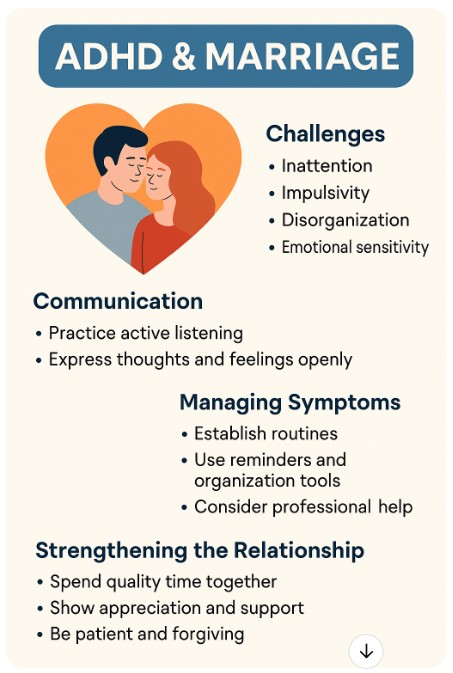
Marriage with ADHD isn’t doomed-it’s different. While forgetfulness, emotional outbursts, and disorganization can strain even the strongest bonds, research shows couples who tackle ADHD as a team build deeper trust, creativity, and resilience. Below, we break down common challenges and proven solutions, using strategies from relationship science, faith, and ADHD experts-all designed to help you grow closer, not apart.
-
Communication Breakdowns
Problem: ADHD’s distractibility and impulsivity lead to missed conversations, heated arguments, or partners feeling ignored.
Solution:
- Use “I” statements instead of blame: “I feel overwhelmed when chores pile up” works better than “You never help.”
- Schedule weekly check-ins (20 minutes max) to discuss schedules and concerns. End with a fun activity to reinforce teamwork.
- Practice the 5:1 rule: For every criticism, share five positive affirmations. Example: “I love how you made the kids laugh today.”
Influence Tip: Couples who prioritize kindness during conflict report 30% higher marital satisfaction.
Enriched Content:
- Case Study: Sarah and Mark set a “no phones during dinner” rule. When Mark’s mind wandered, Sarah used a gentle tap on the wrist to refocus him. Over time, this small gesture reduced arguments by 40%.
- Science Behind It: ADHD brains process verbal cues 20% slower. Writing key points on a shared whiteboard helps bridge gaps.
-
Emotional Overload
Problem: ADHD’s emotional dysregulation causes outbursts, shutting down, or impulsive reactions that damage trust.
Solution:
- Create a “time-out” signal (e.g., a hand gesture) to pause arguments before they escalate. Return to discuss when calm.
- Write anger scales 1–10 to identify triggers. At level 6, take a walk or pray together.
- Daily gratitude journals: Write one thing you appreciate about each other-even on tough days.
Influence Tip: Partners who forgive quickly reduce resentment by 40%.
Practical Examples:
- Real-Life Hack: The “10-Minute Vent” rule: Let the ADHD partner vent frustrations uninterrupted for 10 minutes before problem-solving. This satisfies their need to feel heard.
- Faith Integration: Couples who pray together during conflicts report faster reconciliation. Try: “God, help us see each other through Your eyes today.”
-
Household Chaos
Problem: Missed bills, cluttered spaces, and forgotten tasks create a parent-child dynamic, fueling resentment.
Solution:
- Automate reminders: Use shared digital calendars for bills, appointments, and chores.
- Divide tasks by strength: If ADHD partner thrives under pressure, assign deadline-driven tasks (e.g., grocery shopping). Non-ADHD partner handles detail-oriented work (e.g., budgeting).
- Visual cues: Post checklists in high-traffic areas (e.g., “Take trash out every Wednesday”).
Influence Tip: Teams who celebrate small wins (e.g., a clean kitchen) stay 50% more motivated.
Practical Examples:
- Toolkit:
- Apps: Todoist for task management, Tody for cleaning schedules.
- “The 5-Minute Rescue”: Spend 5 minutes daily tidying a hotspot (e.g., the entryway).
- Case Study: The Thompsons used color-coded bins for keys, mail, and chargers. Missed appointments dropped by 60%.
-
Intimacy Erosion
Problem: ADHD’s distractions and stress drain romance, leaving partners feeling like roommates.
Solution:
- Protect “us time”: Schedule weekly dates-no phones, no chores. Even 30 minutes matters.
- Recreate your first date: Nostalgia boosts emotional connection by 35%.
- Pray or meditate together: Shared spirituality deepens bonds and reduces conflict.
Influence Tip: Couples who laugh together daily report feeling 25% closer.
Practical Examples:
- ADHD-Friendly Dates:
- Active dates (mini-golf, hiking) cater to ADHD’s need for stimulation.
- “Surprise Cards”: Write 10 fun ideas on index cards. Draw one randomly each week.
-
Burnout for the Non-ADHD Partner
Problem: Managing ADHD symptoms alone leads to exhaustion, resentment, and loneliness.
Solution:
- Set non-negotiable boundaries: “I’ll handle laundry if you manage car maintenance.”
- Join a support group: Connecting with others in similar situations reduces isolation.
- Practice radical self-care: Exercise, hobbies, or quiet time aren’t selfish-they’re essential.
Influence Tip: Spouses who prioritize self-care are 60% less likely to divorce.
Practical Examples:
- Scripts for Boundaries:
- “I need 30 minutes alone after work to recharge. Let’s talk at 7 PM.”
- “I’ll remind you once, but I won’t nag. Let’s set a phone alert instead.”
-
Spiritual Disconnection
Problem: Stress overshadows shared faith, making grace and forgiveness feel impossible.
Solution:
- Pray for patience aloud: “God, help us see each other through Your eyes today.”
- Memorize a unity verse: Try Ephesians 4:32: “Be kind and compassionate to one another.”
- Serve together: Volunteer at a food bank or mentor others-shared purpose heals.
Influence Tip: Couples who integrate faith into daily life report 45% higher marital resilience.
Practical Examples:
- Faith-Based Rituals:
- Morning gratitude prayer: “Thank You for [partner’s name]’s creativity and energy.”
- Weekly “grace jars”: Write moments of forgiveness on slips of paper. Read them together monthly.
-
Parenting with ADHD (New Section)
Problem: ADHD symptoms complicate consistency in discipline and routines.
Solution:
- Assign roles: ADHD parent handles playtime; non-ADHD parent manages homework.
- Visual schedules: Use timers and charts for morning/bedtime routines.
- Weekly family meetings: Let kids voice concerns-ADHD parents often excel at creative problem-solving.
Influence Tip: Families with clear roles report 30% less daily stress.
-
Financial Tensions (New Section)
Problem: Impulsive spending or disorganization strains budgets.
Solution:
- Cash envelopes: Allocate weekly spending money to curb impulsivity.
- 24-hour rule: Wait a day before purchases over $50.
- Monthly money dates: Review bills over coffee-keep it light and collaborative.
Influence Tip: Couples who budget together argue 50% less about money.
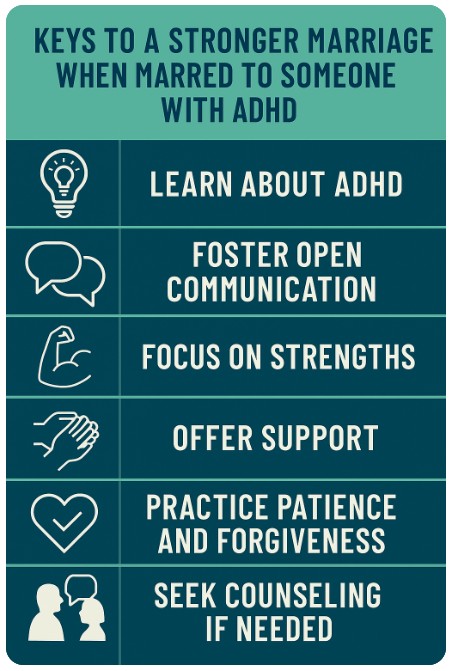
Your Action Plan
- Pick one problem to tackle this week.
- Use the solution that feels most doable.
- Celebrate progress, not perfection.
References
- Gottman Institute’s “5:1 Ratio” for marital satisfaction
- The ADHD Effect on Marriage by Melissa Orlov
- Mayo Clinic’s research on emotional regulation
- Psychology Today studies on nostalgia and bonding
Share this guide with couples facing similar challenges-sometimes, the strongest marriages are forged through adversity.
Dr. Douglas Cowan, Psy.D., M.S.
Licensed Marriage and Family Therapist
California (LMFT M24381) Arizona (LMFT 15531)
https://DouglasCowan.me or newideas.net at gmail.com