
Interpreting Creyos Assessments in Anxiety, Stress, and Emotional Dysregulation
By Dr. Douglas Cowan, Psy.D., Marriage and Family Therapist
Anxiety doesn’t just affect how we feel—it affects how we think. Chronic stress, worry, and emotional overload can significantly impair attention, memory, and decision-making.
Creyos Cognitive Assessments give clinicians a powerful window into how anxiety shows up in the brain. By observing how a client performs across 12 validated cognitive tasks, we can detect patterns that reflect emotional dysregulation—even when no symptoms are verbally reported.
🧠 How Anxiety Affects Cognitive Function
Chronic anxiety triggers:
- Elevated cortisol
- Hyperactivation of the amygdala
- Suppression of prefrontal cortex function
This creates:
- Weakened attention and memory
- Decision-making difficulty
- Inhibition problems
- Slow cognitive processing under pressure
🧪 Creyos Subtests Commonly Affected by Anxiety
Anxious individuals often struggle with: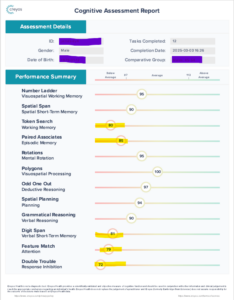
- Double Trouble (Response Inhibition)
Low scores due to racing thoughts or emotional interference - Feature Match (Sustained Attention)
Errors or slower reaction times caused by internal distraction - Spatial Planning
Hesitation, second-guessing, or analysis paralysis - Paired Associates (Episodic Memory)
Difficulty encoding or recalling due to divided attention - Token Search
Working Memory - Reaction Time
May be either slow (from caution) or overactive (from stress)
🔍 Anxiety vs. ADHD on Creyos
| Anxiety | ADHD | |
|---|---|---|
| Consistency | Slower but consistent | Variable, erratic |
| Error Type | Perfectionistic, cautious | Impulsive, inattentive |
| Self-report | GAD-7 elevation | ASRS elevation |
| Cognition | Emotionally clouded | Executive dysfunction |
🧠 Watch for combinations of slow processing + high inhibition = anxiety
💡 Impulsive errors + inconsistency = ADHD
🔁 Patterns That Suggest Anxiety or Chronic Stress
- Mild depression of scores across multiple domains
- Slower performance on timed tasks without severe errors
- Memory issues despite average reasoning ability
- Difficulty with transitions or open-ended problems
- Perfectionism or excessive caution on verbal reasoning tasks
🧩 Combine Creyos with GAD-7 and Rivermead
Creyos becomes even more powerful when used alongside self-report tools like:
- GAD-7 – to quantify anxiety symptoms
- Rivermead – to rule out post-concussion cognitive symptoms
Example: A client scores in the 45th percentile on Feature Match and reports a GAD-7 score of 10. While not dramatically impaired, this pattern of cognitive inhibition and internal distraction can confirm anxiety as a functional issue.
🧘 Clinical Interventions and Recommendations
- CES CalmBox
Use 30 minutes daily or more to regulate nervous system activity and calm emotional reactivity. Neuro-modulation technology. - LifeWave Patch Protocol
- Aeon – Reduces cortisol, inflammation, and stress reactivity
- X39 – Supports energy, resilience, and cellular repair
- Alavida – Supports restorative sleep (if insomnia is present)
- Mindfulness and CBT Techniques
To enhance self-regulation, reduce avoidance, and improve emotional flexibility - Lifestyle Adjustments
- High-protein breakfast
- Eliminate sugar and caffeine spikes
- Omega-3s, magnesium glycinate, and daily hydration
- Sleep Hygiene
Remove screen time before bed, implement a routine, and use calming supplements or patches
🧠 Final Thoughts
Anxiety alters how we think—not just how we feel.
Using Creyos Cognitive Assessments in combination with GAD-7 and thoughtful clinical interviewing allows providers to see how stress and emotional overload impair attention, memory, and inhibition in real time.
We use these tools with our clients in our work with athletes, business leaders, and other clients.
These insights can help guide interventions like CES, LifeWave patches, therapy, nutrition, and stress-reduction strategies that restore both cognitive function and emotional balance.
📝 Disclaimer: This article is for educational purposes only and is not a substitute for medical diagnosis or treatment. Please consult a licensed healthcare provider before starting any intervention.