
Understanding Anxiety Symptoms in 2025
According to the World Health Organization, the global prevalence of anxiety disorders surged post-pandemic, with estimates suggesting that over 30% of adults under the age of 30 now report chronic anxiety symptoms. Anxiety isn’t simply about being nervous; it’s a constellation of physical and emotional responses. Symptoms often include chest tightness, racing thoughts, muscle tension, irritability, difficulty concentrating, and a persistent sense of dread. Chronic anxiety can impair cognitive function, disrupt sleep, and increase the risk for depression.
The Problem: Traditional Treatments Don’t Work for Everyone
Despite widespread use, SSRIs and benzodiazepines are not effective for everyone and can come with serious drawbacks. Side effects such as weight gain, sexual dysfunction, emotional blunting, or withdrawal symptoms deter many individuals from long-term use. Therapy, while highly effective, often requires months or years of commitment. For individuals experiencing physiological hyperarousal, such as trauma survivors or those with panic attacks, top-down cognitive therapies may not reach the root of the dysregulation. This has led researchers and clinicians to explore bottom-up, brain-based interventions like Direct Neurofeedback.
What is Direct Neurofeedback?
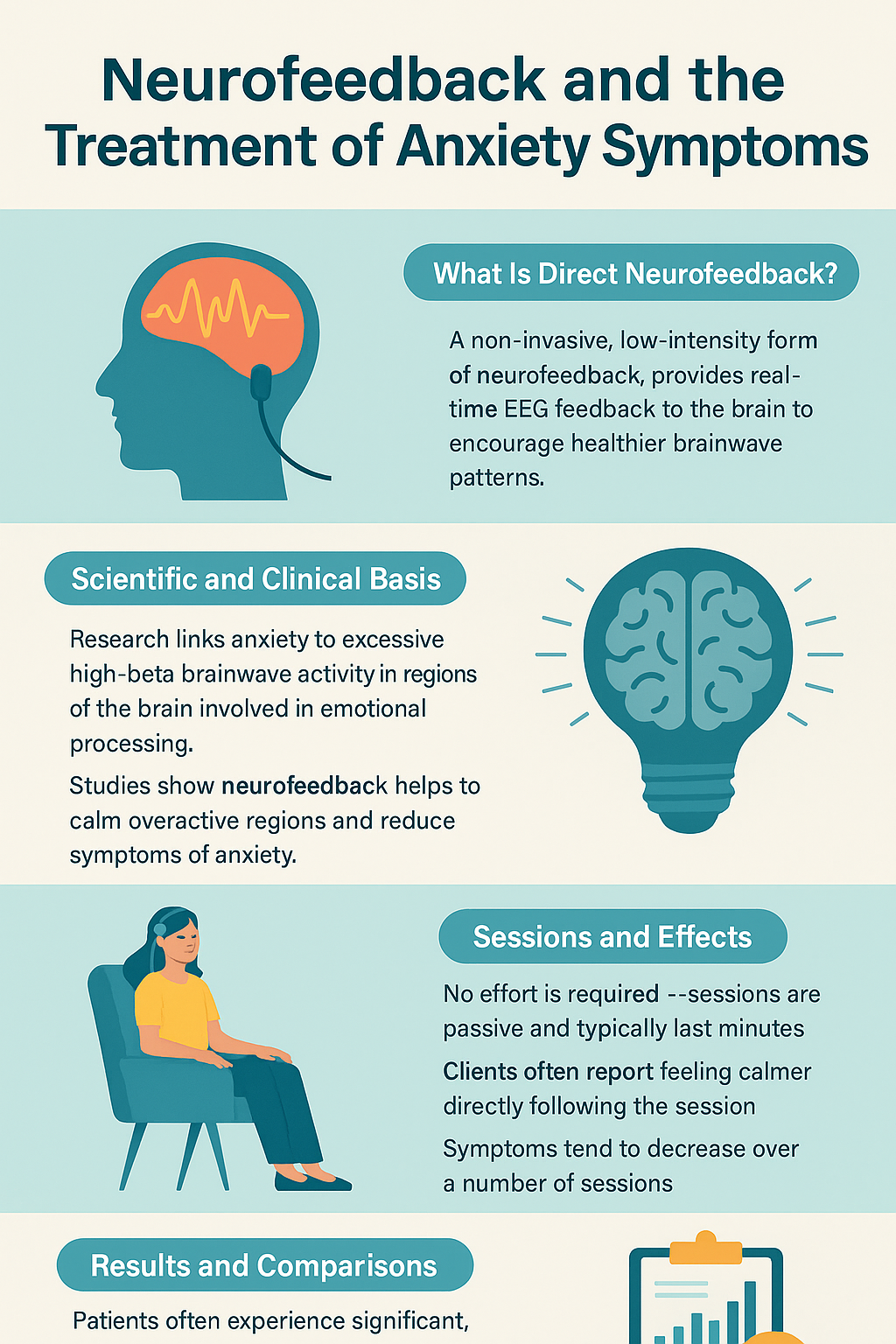
Direct Neurofeedback (DNF) is a form of microcurrent neurostimulation that bypasses traditional operant conditioning models. Rather than requiring conscious effort or repeated training, DNF sends subthreshold signals—typically in the pico- to micro-amp range—through the scalp to the brain. These tiny impulses are strong enough to momentarily interrupt maladaptive neural circuits without overwhelming the system. The technique leverages the brain’s innate plasticity, helping it to reorganize and self-correct without requiring the client’s conscious participation. This mechanism aligns with the principles of dynamic systems theory in neuroscience.
How Direct Neurofeedback Helps with Anxiety Symptoms
Anxiety often correlates with overactivation in the right prefrontal cortex and limbic structures like the amygdala. Research shows that trauma and chronic stress can cause the brain to become stuck in high-frequency beta or high-beta wave patterns. These patterns are associated with rumination, panic, and emotional dysregulation. Direct Neurofeedback disrupts these patterns subtly—without introducing artificial signals or requiring cognitive processing. Studies conducted by the developers of IASIS Microcurrent Neurofeedback (a leading DNF system) have shown a significant reduction in generalized anxiety disorder (GAD) symptoms, with effect sizes comparable to pharmacological treatments.
Clinical and Research Support for Direct Neurofeedback
A 2020 pilot study by Collura and colleagues published in *Journal of Neurotherapy* noted statistically significant reductions in anxiety scores among adults who received eight sessions of microcurrent neurofeedback. Additionally, clinicians have reported anecdotal success with clients diagnosed with panic disorder, social anxiety, and PTSD. A retrospective case series published in *Advances in Mind-Body Medicine* highlighted symptom relief in over 75% of military veterans with treatment-resistant PTSD and comorbid anxiety following Direct Neurofeedback. Furthermore, unlike stimulant medications or benzodiazepines, Direct Neurofeedback has no known dependency risks or cognitive side effects.
What Sessions Are Like
During a typical session, a provider places electrodes on specific scalp locations informed by symptom profiles or qEEG data if available. The microcurrent signal is administered for a few seconds—no longer than 20–30 seconds per placement. Clients often report feeling relaxed, tired, or more emotionally grounded shortly after the session. Over time, the cumulative effect of sessions builds a more regulated baseline. It’s not uncommon for individuals to report increased stress resilience, clearer thinking, and better sleep within the first three weeks.
How It Compares to Other Treatments
Direct Neurofeedback requires fewer sessions than traditional neurofeedback, which can range from 30 to 60 sessions. It also does not rely on active concentration, making it ideal for children, trauma survivors, or individuals in crisis. Compared to pharmacological approaches, DNF avoids systemic effects, and compared to CBT, it works through the body’s electrical system rather than thought restructuring. Direct Neurofeedback is also highly compatible with complementary treatments like CES (Cranial Electrotherapy Stimulation), tapping (EFT), mindfulness, and somatic therapies.
Why Choose Direct Neurofeedback for Anxiety Symptoms?
For clients overwhelmed by talk therapy or wary of medication, Direct Neurofeedback offers a direct path to neurological balance. Its passive nature respects the body’s need for safety and calm, making it especially valuable for individuals with complex trauma, autonomic dysregulation, or sensory processing challenges. Providers frequently report that even clients who have been ‘stuck’ for years often see positive momentum with this modality. For clinicians, it’s a powerful tool to integrate into anxiety treatment plans, especially when traditional therapies plateau.
Getting Started: What to Expect
Initial consultation includes a clinical intake to determine appropriateness. Some providers also perform qEEG brain mapping. Treatment typically begins with one or two sessions per week. Many individuals complete their course of care in 10–20 sessions, though some benefit from maintenance sessions. The process is adaptable to the client’s tolerance, making it safe for use even in fragile populations.
Final Thoughts: A Gentle Reset for the Anxious Brain
Anxiety is not just a mind problem—it’s a brain and body problem. Direct Neurofeedback acknowledges this reality by working through the body’s own neural communication systems. Its subtle intervention helps restore harmony, improve emotion regulation, and create the internal safety needed for sustainable healing. In a world where anxiety continues to rise, this innovative treatment may provide the relief that so many are seeking.
Ready to Experience a Calmer, More Focused Mind?
If you’re struggling with anxiety symptoms, ADHD, or cognitive overload, there’s real help available—and it doesn’t require medications or months of frustration.
At CalmWaves Brain Health and Performance, we offer a compassionate, science-backed approach that combines:
– Direct Neurofeedback
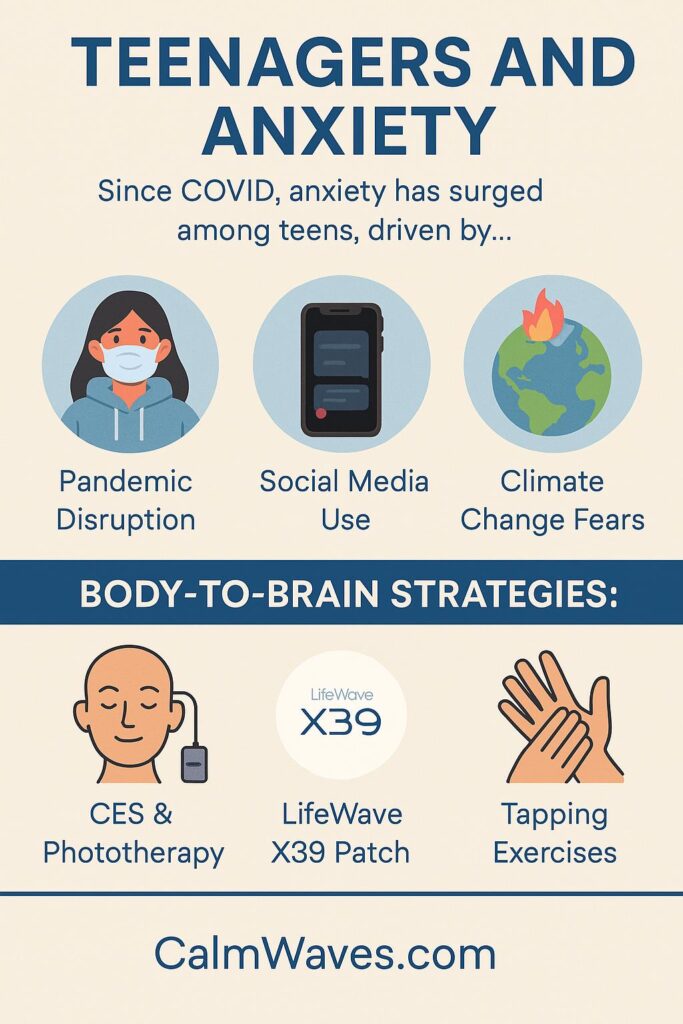
– CES CalmBox technology
– LifeWave phototherapy patches
– Individualized therapy and coaching
– And over 35 years of experience helping people just like you regain clarity, calm, and control.
Take the first step toward resetting your brain and reclaiming your life.
📞 Call Dr. Douglas Cowan, Psy.D., LMFT
📍 CalmWaves Brain Health and Performance
📱 (661) 972-5953
📧 newideas.net@gmail.com
Whether you’re an adult navigating high performance stress, a parent supporting a child with ADHD, or someone who just knows there’s a better way to feel—let’s talk.